Music, Fashion & Culture: The Inseparable Language of Creative Expression
Music, Fashion & Culture: The Inseparable Language of Creative Expression
Published: June 28, 2026
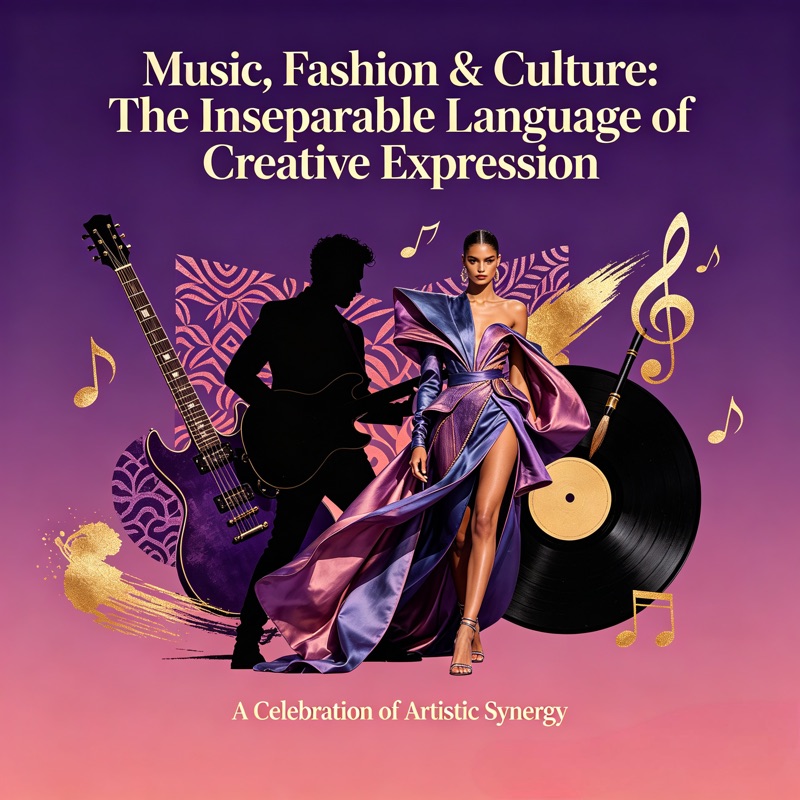
Category: Cultural Analysis • Art & Lifestyle • Global Trends
Source: Glamour & Talent: Hollywood Models ~ Fashion Blog World Alliance – In Association with Hollywood.com
Introduction
Music, fashion, and culture have long existed as distinct forms of human expression, yet throughout history they have remained deeply interconnected, each shaping and reflecting the other in a continuous cycle of influence. What begins as a rhythm or a melody often evolves into a visual identity, while a new style of dress frequently carries the spirit and attitude of a particular sound or movement. Together, they form a universal language that transcends borders, communicates values, and defines the spirit of every era. In the modern world, this relationship has grown even more pronounced, as artists, designers, and creators collaborate to produce experiences that engage both sight and sound. To understand the evolution of style, society, and creative identity, one must examine how these three elements converge, interact, and collectively influence the way people live, dress, and view the world around them.
Historical Roots: How Movements Shape Identity
The connection between music and fashion can be traced back through every major cultural shift of the past century. In the early decades of the twentieth century, jazz music introduced a sense of freedom and improvisation that found its parallel in the loosening of structured garments, shorter hemlines, and more relaxed silhouettes that defined the Roaring Twenties. As rock and roll emerged in the 1950s, it brought with it a rebellion against tradition, expressed through leather jackets, denim jeans, and bold hairstyles that signaled a break from the conservative norms of the time. The 1960s and 1970s saw the rise of folk, psychedelic, and funk music, each accompanied by distinct visual aesthetics—flowing fabrics, vibrant patterns, and ethnic-inspired designs that reflected a desire for peace, unity, and global awareness.
By the 1980s and 1990s, this bond had become even more intentional. Genres such as punk, hip‑hop, and new wave did not just produce sound; they created complete lifestyles. Punk music was matched by distressed fabrics, safety pins, and sharp lines, conveying anti‑establishment sentiment. Hip‑hop culture introduced oversized silhouettes, sportswear, gold accessories, and bold logos, transforming streetwear into a powerful symbol of community, pride, and urban identity. In every case, fashion became the visible signature of a musical movement, allowing people to declare their affiliation, their beliefs, and their place within a broader cultural landscape without uttering a single word.
The Modern Fusion: Sound as Visual Inspiration
In the twenty‑first century, the relationship between music and fashion has evolved from simple association into a fully integrated creative partnership. Artists are no longer only performers; they have become creative directors, style icons, and even designers, using their visual presentation to amplify the message of their music. Every album release, music video, or stage performance is carefully crafted to include a distinct aesthetic that complements the sound and lyrics. This is clearly visible in the work of global stars such as Lalisa “Lisa” Manobal, whose music blends pop, hip‑hop, and traditional influences, while her wardrobe ranges from high‑fashion couture to edgy streetwear, creating a look that is as dynamic and versatile as her artistry. Similarly, figures like Rihanna, Pharrell Williams, and Beyoncé have blurred the lines between recording studios and fashion houses, proving that artistic vision applies equally to what is heard and what is seen.
This fusion extends beyond individual artists to influence the fashion industry at large. Designers regularly draw inspiration from musical genres, eras, and moods when creating collections. A symphony of classical elegance may translate into structured, flowing gowns; the energy of electronic dance music may inspire futuristic silhouettes and metallic textures; and the soul of blues or jazz may be reflected in rich fabrics, deep tones, and timeless cuts. In this way, music acts as a source of emotion and concept, while fashion gives that emotion a tangible, wearable form.
Culture as the Common Ground
Beneath the relationship between music and fashion lies culture—the shared beliefs, history, and values that give both forms of expression their true meaning. Music and fashion do not exist in a vacuum; they are shaped by the traditions, geography, and social conditions of the communities from which they emerge. They serve as vehicles for preserving heritage and introducing it to the wider world. For example, the global rise of K‑pop has brought not only a new sound but also a unique blend of modern styling and subtle references to Korean aesthetics and craftsmanship. Similarly, Latin music, African rhythms, and Southeast Asian melodies have introduced patterns, textiles, and design elements that were once region‑specific into the mainstream global fashion vocabulary.
This exchange also works as a tool for cultural dialogue. When an artist incorporates traditional instruments or melodies into their work, and pairs them with garments made from indigenous fabrics or featuring local motifs, they create a bridge between their roots and a global audience. Catriona Gray demonstrates this principle effectively, merging international style with Filipino textiles and craftsmanship, much in the same way that musicians combine traditional sounds with modern production techniques. Such efforts show that culture is not static; it is a living, evolving entity that grows stronger when shared and reinterpreted.
Influence on Society and Lifestyle
The combined power of music, fashion, and culture extends far beyond entertainment and aesthetics; it shapes social norms, consumer habits, and the way people construct their identities. These elements together define what is considered desirable, acceptable, or innovative in any given time period. They provide individuals with a framework through which they can express their personality, belong to a community, and communicate their aspirations. In an era defined by digital connectivity, trends now travel faster than ever before. A style seen in a music video or on a stage in one part of the world can become a global phenomenon within days, demonstrating how interconnected our cultural landscape has become.
Furthermore, this influence carries the potential to drive positive change. Both music and fashion have been used to raise awareness about social issues, promote inclusivity, and challenge outdated stereotypes. They allow new voices and perspectives to be heard and seen, breaking down barriers of class, race, and geography. When aligned with purpose, they can inspire a generation to value authenticity, diversity, and creativity. As we have observed in previous discussions, the most enduring styles and sounds are those that remain true to their cultural roots while adapting to the changing times.
The Cycle of Creativity
What makes this relationship so powerful is its continuous nature. Music inspires fashion, fashion reinforces the image of the music, and both together shape the culture of the moment. That culture then influences the next generation of artists and designers, creating a cycle that ensures evolution and renewal. There is no beginning or end to this process; it is a flow of ideas, where each form of expression informs and elevates the others. A song can change the way people move, feel, and dress; a new style can change the way people present themselves and interact with the world; and culture provides the context that gives all of this meaning and significance.
This dynamic is perfectly aligned with the mission of Glamour & Talent: Hollywood Models ~ Fashion Blog World Alliance. By examining how music, fashion, and culture intersect, we gain a deeper understanding of what drives trends, shapes identities, and connects people across the globe. It reminds us that true glamour is not found in a single garment or a single song, but in the harmony between what we create, how we express it, and what it represents.
Conclusion
Music, fashion, and culture are inseparable pillars of human creativity, each dependent on the others to fully realize its potential. Music provides the rhythm and emotion, fashion gives it form and visibility, and culture supplies the depth and meaning that resonates across generations. Together, they tell the story of who we are as a society, reflecting our history, our values, and our aspirations for the future. As the world continues to grow more connected, this relationship will only strengthen, offering new opportunities for artists and designers to collaborate, innovate, and inspire. Ultimately, understanding the link between these three forces allows us to appreciate not just what we see and hear, but the rich, interconnected heritage and creativity that defines modern life.


Comments
Post a Comment