FASHION WEEK: OPERA'S INFLUENCE ON HOLLYWOOD GLAMOUR
FASHION WEEK: OPERA'S INFLUENCE ON HOLLYWOOD GLAMOUR
From Grand Stages to Red Carpets – How Opera’s Drama, Elegance, and Artistry Shaped Modern High Fashion
Published: June 11, 2026
Category: Fashion Week Special • Couture History • Art & Style • G&T Spotlight
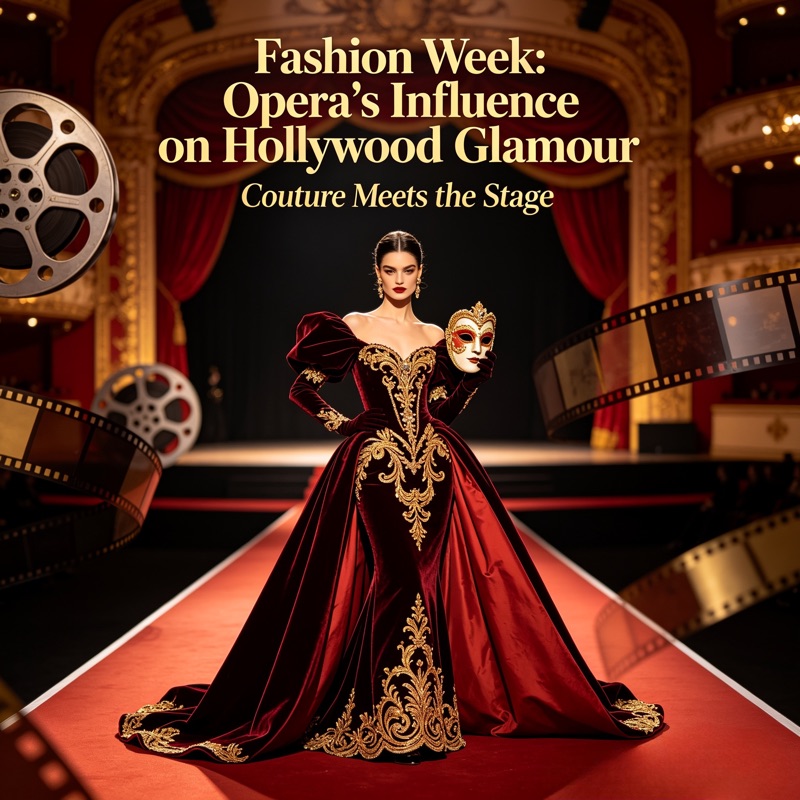
When we think of opera, we often imagine grand theaters, soaring voices, and centuries-old stories of passion, tragedy, and triumph. But beyond the music and drama, opera has long been a powerful source of inspiration for the world of fashion. For over a century, the opulence, scale, and theatricality of the operatic stage have seeped into the design rooms of the greatest couturiers, eventually crossing over to define the golden age of Hollywood glamour and continuing to shape the most breathtaking collections seen at Fashion Weeks today. This is the story of how the art form that once moved emperors and artists became the blueprint for the timeless, dramatic elegance that turns red carpets into modern-day stages.
THE STAGE AS A MUSE: WHERE OPERA AND FASHION FIRST MEET
Opera was never just about sound—it was always a complete visual spectacle. From its origins in Renaissance Italy, it was designed to astonish: elaborate sets, rich fabrics, dramatic silhouettes, and costumes that told a character’s story at a glance. Whether it was the regal robes of a monarch, the flowing gowns of a tragic heroine, or the bold armor of a hero, operatic costume design was meant to convey emotion, status, and fantasy. It was the ultimate form of wearable art, created to be seen from the highest balconies of vast theaters—meaning it needed to be both grand and detailed.
This philosophy caught the eye of early fashion designers, who recognized that the same principles applied to high fashion: clothing should not only cover the body but express personality, command attention, and create a sense of magic. Designers like Christian Dior, Elsa Schiaparelli, and Coco Chanel—all lovers of the arts—drew heavily from the opera houses of Paris, Milan, and Vienna. They took the voluminous skirts, the luxurious fabrics, the rich color palettes, and the sense of romanticism and reimagined them for the modern woman. Opera taught fashion that clothing could be dramatic, that it could tell a story, and that there is power in beauty and scale.
THE GOLDEN AGE: OPERA’S SHADOW OVER HOLLYWOOD
As the film industry rose to prominence in the early 20th century, it looked to the most refined art forms of the past to establish its own sense of prestige. Hollywood sought to create a world of fantasy and elegance that could rival the grandeur of European opera—and it succeeded, largely by borrowing directly from its visual language.
The great costume designers of Hollywood’s golden era—Edith Head, Adrian, and Travis Banton—were deeply influenced by operatic aesthetics. They created gowns for stars like Marlene Dietrich, Grace Kelly, Audrey Hepburn, and Rita Hayworth that mirrored the drama found on the opera stage: sweeping trains, structured bodices, luxurious silks and satins, dramatic necklines, and intricate embellishments. Just as an opera costume helps an audience understand a character, these gowns helped transform actresses into larger-than-life figures.
This created what we now know as Hollywood Glamour: a style defined by elegance, poise, and a touch of theatricality. It was never meant to look like everyday wear—it was meant to make the wearer feel like a leading lady, much like a soprano taking center stage. Even the way stars carried themselves—poised, confident, aware of being watched—echoed the presence of a great opera performer. Opera gave Hollywood the vocabulary to turn movie stars into icons, and in turn, Hollywood spread that operatic-inspired glamour to every corner of the globe.
ON THE RUNWAY: OPERA’S PRESENCE IN MODERN FASHION WEEK
Today, if you look closely at the collections presented during Paris, Milan, New York, and Manila Fashion Weeks, the influence is impossible to miss. Opera remains a recurring theme, as designers revisit its timeless beauty and emotional power.
Key Elements of Opera in Fashion
• Drama and Silhouette: The most obvious influence is the shape. Designers often create gowns with voluminous skirts, structured corsetry, and dramatic trains—echoing the ballgowns and period costumes of 19th-century opera. Think of the grand entrance of a character in La Traviata or Aida—that same feeling of arrival is translated into modern couture.
• Luxury and Material: Opera was always made with the finest materials, and so is opera-inspired fashion. We see heavy use of silk, satin, velvet, brocade, and tulle, fabrics that have a rich, tactile quality and catch the light beautifully. Embroidery, beading, and lace—techniques perfected over centuries for stage costumes—are still used to add depth and opulence.
• Color and Symbolism: Opera uses color to convey mood: deep reds and purples for passion and royalty, ivory and gold for purity and grandeur, midnight blues and blacks for mystery and tragedy. Fashion designers continue this tradition, using rich, saturated hues that evoke emotion and command attention.
• Theatricality: Perhaps the most important lesson opera taught fashion is that clothing is a form of performance. At Fashion Week, designers do not just sell clothes—they present a vision. A collection inspired by opera often feels like a story unfolding, with each model playing a role, just as singers do on stage.
Filipino Designers and the Operatic Spirit
This influence is particularly visible in the work of the Filipino designers we admire. Mak Tumang, whose Mayon Gown for Catriona Gray captivated the world, designed it with the same narrative grandeur as an operatic masterpiece—telling a story of nature, heritage, and beauty through form and detail. Michael Cinco is renowned for his opulent, dream-like creations that feel as though they belong on a grand stage, with layers of fabric and thousands of crystals creating a sense of wonder and scale. Michael Leyva and Rajo Laurel also embrace this spirit, blending the dramatic elegance of opera with indigenous materials and stories, proving that this art form can be adapted to any culture and heritage.
FROM RED CARPET TO CENTER STAGE: MODERN ICONS
The connection remains alive and well today. When we see stars like Sabrina Carpenter, Zendaya, Lady Gaga, or our very own Heart Evangelista arrive at the Met Gala or the Oscars in breathtaking couture, they are continuing a tradition that began in the opera houses centuries ago.
• The Met Gala itself is the ultimate example—often themed around art, music, or history, it is essentially a modern opera, where attendees dress in costume to embody a concept. The gowns worn there are often the most operatic in scale and detail.
• Catriona Gray’s Mayon Gown is a perfect modern example: it had the grandeur, the storytelling, and the visual impact of a great operatic costume, designed to be seen and felt by a global audience.
• Even Sabrina Carpenter, with her blend of retro glamour and playful sophistication, channels the poise and presence of a performer—showing that you do not need a full ballgown to carry that operatic sense of self-assurance.
These stars understand that wearing a great gown is not just about looking good; it is about commanding the room, expressing a feeling, and leaving a lasting impression—exactly what a great opera performance aims to do.
WHY THIS INFLUENCE ENDURES
Opera’s influence has lasted because it speaks to something universal: the love of beauty, the power of storytelling, and the desire to feel extraordinary. In a world that often values minimalism and speed, opera-inspired fashion reminds us that there is a place for grandeur, for detail, and for emotion.
It also bridges the gap between high art and popular culture. It shows that fashion is not just about trends or commerce—it is a legitimate art form, capable of moving people, telling stories, and reflecting the human experience, just like music or theater. When we wear a gown that echoes the drama of the opera, we are stepping into a legacy of artistry, craftsmanship, and elegance that spans centuries.
CONCLUSION: THE ENDLESS ENCORE
Fashion Week continues to pay homage to the opera, proving that true style is timeless. What began as costumes for singers in European theaters evolved into the glamour of Hollywood, and now stands as one of the most beloved and influential aesthetics in the world. It teaches us that fashion is performance, that fabric can carry emotion, and that true glamour is found in the courage to be dramatic, the wisdom to honor craft, and the heart to tell a story.
As designers continue to look to the arts for inspiration, the connection remains strong: the opera house and the runway are two sides of the same coin—both stages where beauty is celebrated, and where every entrance is an opportunity to shine.


Comments
Post a Comment