FASHION WEEK: THE ART OF PHILIPPINE GOWN DESIGN
FASHION WEEK: THE ART OF PHILIPPINE GOWN DESIGN
Weaving Heritage, Craftsmanship, and Modern Elegance Into Global Couture
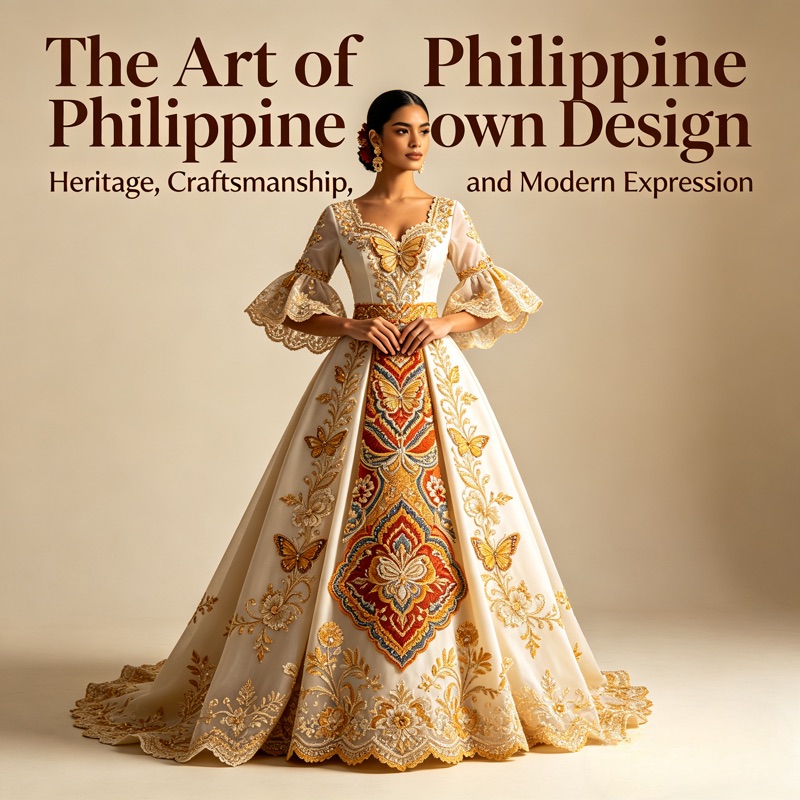
Published: June 06, 2026
Category: Fashion Week Special • Couture & Craftsmanship • Cultural Heritage • G&T Spotlight
When the curtains rise and the lights illuminate the runway at fashion weeks around the world, few designs capture the imagination quite like those rooted in Philippine artistry. Philippine gown design is far more than just clothing; it is a living, breathing form of storytelling—one that weaves together centuries of tradition, indigenous craftsmanship, colonial influences, and contemporary innovation. From the intricate hand-embroidered Baro’t Saya of the Spanish era to the sleek, avant-garde creations that now grace runways in Paris, New York, and Milan, it represents a unique fusion of the past and the future. This art form has evolved from a symbol of cultural identity into a global fashion force, proving that Filipino design stands among the finest in the world, admired for its detail, grace, and timeless beauty.
🧵 THE FOUNDATION: TRADITION AS INSPIRATION
To understand the art of Philippine gown design, one must first look to its roots. Long before the concept of modern fashion existed, the archipelago was home to rich textile traditions developed by indigenous communities across the islands. Each region developed its own distinct techniques, patterns, and materials, shaped by local resources, climate, and beliefs. The Inabel weaving of the Ilocos region, known for its durable geometric patterns; the vibrant T’nalak of the T’boli people, woven from abaca fibers and dyed with natural pigments; the intricate Hablon of Panay; and the bold Malong of Mindanao—these are not merely fabrics, but cultural archives, carrying stories of ancestors, nature, and community.
These traditions later blended with influences from centuries of trade and history, most notably the introduction of embroidery and tailoring techniques during the Spanish colonial period. This fusion gave birth to the Baro’t Saya, the national dress of the Philippines, which would become the blueprint for modern Philippine gown design. Characterized by its butterfly sleeves, fine piña or jusi fabric, and delicate hand-embroidery known as calado, the Baro’t Saya embodied a distinct kind of elegance—modest yet regal, lightweight yet luxuriously detailed. It was designed for the tropical climate, allowing comfort without sacrificing sophistication, and it set the standard for what would become the signature Filipino aesthetic: beauty that is both intricate and effortless.
Today, this heritage is not left behind in museums; it is the very soul of contemporary gown design. Designers do not simply copy old styles; they reinterpret them, taking the essence of traditional techniques and materials and reimagining them for the modern woman. A gown may feature the transparency and drape of piña cloth, but cut in a sleek, floor-sweeping silhouette; or it may incorporate the bold colors and geometric motifs of indigenous weaves, rendered in modern silks and satins. This respect for the past while embracing the present is what gives Philippine gowns their unique character—they are recognizable as Filipino, yet entirely fresh and relevant on the global stage.
✂️ THE CRAFTSMANSHIP: WHERE ARTISTRY MEETS SKILL
What truly elevates Philippine gown design to the level of fine art is the unparalleled craftsmanship behind every piece. Unlike mass-produced fashion, a true Filipino couture gown is often the result of hundreds, sometimes thousands, of hours of meticulous handwork, involving the skills of master weavers, embroiderers, and tailors whose expertise has been passed down through generations.
At the heart of this craft are the luxury natural fibers that have become synonymous with Filipino design. Piña cloth, made from the leaves of the pineapple plant, is often called the “queen of Philippine fabrics.” It is incredibly labor-intensive to produce—each fiber is carefully scraped, washed, and spun by hand before being woven into a fabric that is sheer, lightweight, and has a subtle, luminous sheen that catches the light beautifully. It is the fabric of choice for many formal gowns, valued for its elegance and its ability to breathe in warm weather. Jusi, made from banana silk or abaca, offers a similar drape with a slightly more structured feel, often blended with piña for added durability and texture.
Then there is the art of embroidery, which is arguably the most defining feature of Philippine gown design. The calado and sombrado techniques—intricate open-work embroidery that creates delicate patterns resembling lace—require immense patience and precision. Skilled artisans work with fine threads to create floral motifs, geometric shapes, and nature-inspired designs, often covering entire bodices, sleeves, and hems. In recent years, designers have also begun to incorporate beadwork, shell inlays, and metallic threads, adding depth and luxury while still honoring the handcrafted spirit. Even the construction of the gown itself follows a philosophy of balance: the silhouette is designed to complement the natural grace of the wearer, emphasizing poise and movement rather than just form.
This dedication to quality is why Philippine gowns are often described as “wearable art.” Every stitch tells a story, every material carries a history, and every gown is a testament to the skill and artistry of Filipino hands. It is a stark contrast to the fast fashion culture of today, reminding the world that true luxury is not measured by a logo, but by the time, respect, and artistry invested in creating something meaningful.
🌟 MODERN MASTERS: DESIGNERS SHAPING THE GLOBAL STAGE
The evolution of this art form would not be possible without the visionary designers who have carried it forward, bringing Philippine gown design to the forefront of international fashion. These creators have taken the traditional language of Filipino style and expanded it, proving that it can compete with the greatest couture houses in the world while remaining deeply rooted in identity.
Rajo Laurel, often referred to as a pioneer of modern Filipino couture, is known for his ability to blend tradition with contemporary glamour. His gowns are celebrated for their bold silhouettes, rich use of indigenous textiles, and dramatic yet refined details. He has dressed royalty, celebrities, and beauty queens, and his work has become synonymous with the idea that Filipino design is both world-class and proudly local. He famously states that he does not design “Filipino clothes,” but rather designs “for the Filipino spirit,” capturing the warmth, vibrancy, and resilience of the people.
Pitoy Moreno, the “Fashion Czar of Asia,” laid much of the groundwork, elevating the Baro’t Saya from a national dress to a symbol of high fashion, worn by first ladies and Hollywood stars alike. His legacy lives on in the work of the next generation. Michael Cinco, whose name is now globally recognized, has redefined Filipino design on the international stage. His opulent, dream-like gowns—characterized by intricate embroidery, voluminous skirts, and breathtaking attention to detail—have been worn by A-listers such as Beyoncé, Jennifer Lopez, and Lady Gaga. While his work is often described as grand and modern, it still carries the DNA of his heritage: a love for intricate detail, graceful movement, and a sense of regal beauty.
Mark Bumgarner, Monique Lhuillier, Francis Libiran, and Renz Reyes are just a few of the other names making waves. Monique Lhuillier, based in New York, has become a leading name in bridal and red-carpet fashion, infusing her designs with a romantic elegance that echoes her Filipino upbringing. Francis Libiran is known for his architectural precision and his use of modern technology alongside traditional techniques, creating gowns that are both structurally impressive and softly feminine. Collectively, these designers have shown that there is no single way to be a Filipino designer—they range from minimalist to maximalist, from traditional to avant-garde—but all share a commitment to quality and a connection to their roots.
👑 ON THE RUNWAY: PHILIPPINE GOWNS IN THE SPOTLIGHT
Fashion Week provides the perfect platform for this art form to shine, and in recent years, Philippine gown design has become one of the most anticipated segments of many global showcases. Whether it is during Manila Fashion Week, where local talent takes center stage, or in international venues, these gowns consistently receive standing ovations and critical acclaim.
What makes their presence so powerful is how they adapt to the language of modern fashion while retaining their soul. We see gowns that transform the classic butterfly sleeve into a sleek, sculptural element; gowns that use T’nalak patterns in bold, modern color palettes; gowns that play with transparency and layers, echoing the sheer quality of piña fabric but in entirely new ways. They are worn by Hollywood stars of Filipino heritage—such as Olivia Rodrigo, Vanessa Hudgens, and Saweetie—who choose them for red carpets and events, using their influence to showcase Filipino artistry to millions. They are also immortalized on the global stage through beauty queens like Catriona Gray, whose Luzviminda gown and other creations became global sensations, proving that Philippine design can capture the world’s imagination.
Beyond their aesthetic beauty, these gowns carry a deeper message. In a fashion industry that often prioritizes speed, uniformity, and mass production, Philippine gown design stands as a powerful alternative. It advocates for sustainability, as many of the materials used are natural, renewable, and produced by local communities. It supports heritage preservation, as the demand for these designs helps keep traditional weaving and embroidery techniques alive and provides livelihood for thousands of artisans across the country. It challenges the notion that beauty must look a certain way, offering a distinct aesthetic that is diverse, vibrant, and deeply human.
✨ THE ENDURING LEGACY: BEAUTY WITH SOUL
The art of Philippine gown design is more than just a style; it is a reflection of the Filipino character. It mirrors the country’s history—resilient, adaptable, and richly layered. It embodies the Filipino value of malasakit—care and dedication—seen in every hand-stitched detail. It represents the beauty of diversity, drawing inspiration from over 7,000 islands and hundreds of cultures, yet united in its elegance.
As we look to the future, this art form continues to evolve. Young designers are now experimenting with eco-friendly materials, mixing traditional weaves with modern fabrics, and creating designs that speak to the changing role of women in society—strong, confident, and proud of their identity. They carry forward the same philosophy: that fashion is not just about looking good, but about telling a story, honoring one’s roots, and creating something that lasts.
At Glamour &Talent Hollywood Models, we have always believed that true style is defined by authenticity and substance. Philippine gown design embodies this belief perfectly. It shows us that the most beautiful creations are those that know where they come from, that respect the hands that make them, and that carry a piece of the creator’s heart. It is a reminder that heritage is not something to be left in the past, but a treasure to be worn, celebrated, and shared with the world.
From the looms of the Cordilleras to the embroidery houses of Taal, from the runways of Manila to the red carpets of Hollywood and Paris, the art of Philippine gown design continues to dazzle and inspire. It is a timeless masterpiece, forever evolving, forever beautiful, and forever proudly Filipino.


Comments
Post a Comment