Fashion Judgements: How Product Quality and Price Shape Perceptions Among Different Socioeconomic Groups and Secondhand Shoppers
Fashion Judgements: How Product Quality and Price Shape Perceptions Among Different Socioeconomic Groups and Secondhand Shoppers
Published: June 16, 2026
Category: Fashion Psychology • Consumer Behavior • Society & Style
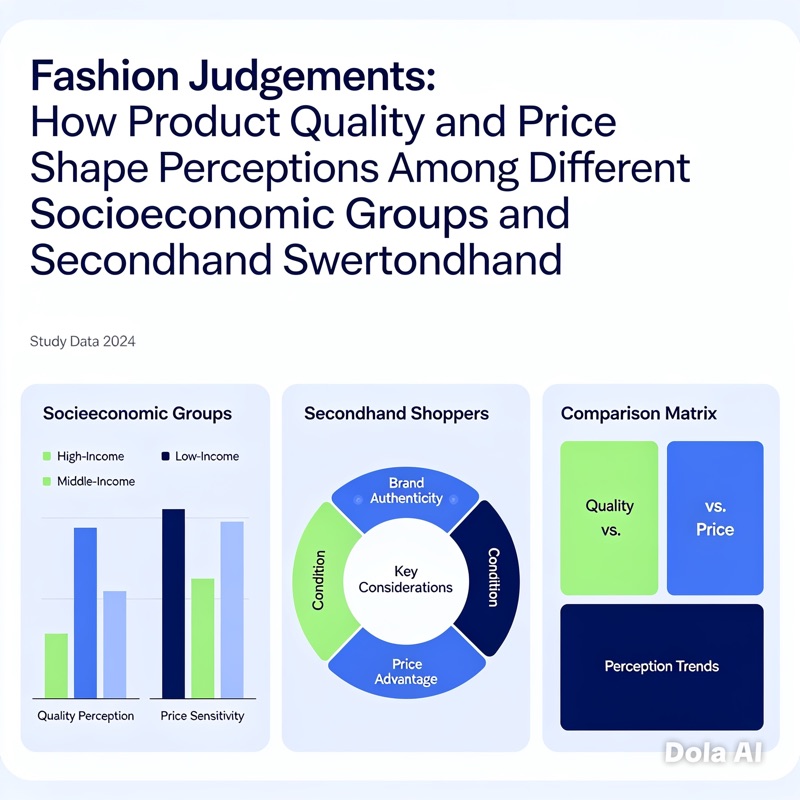
Fashion is often read as a visible signal of identity, status, and means. Across different socioeconomic groups, judgements about clothing are rarely based on fabric or construction alone—they are heavily shaped by price tags, brand names, and where an item was purchased. This dynamic becomes even more complex when considering secondhand shoppers, who navigate a space where value, quality, and social perception often diverge sharply. Understanding these patterns reveals how assumptions are formed, how bias persists, and how ideas of “worth” are slowly being redefined.
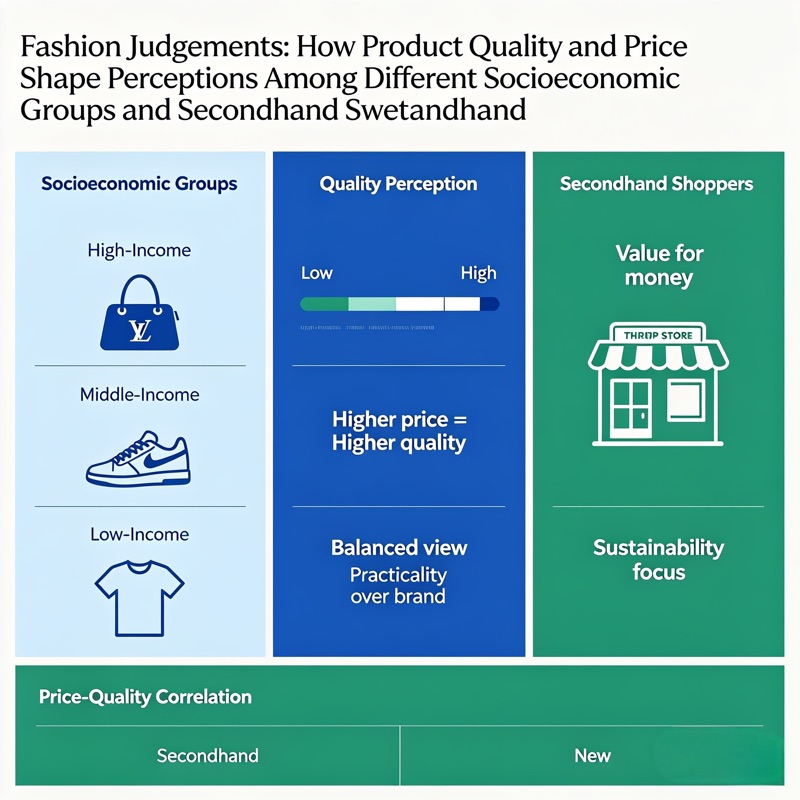
Price as a Default Marker of Value
For many observers, price acts as the first and most convenient reference point. In higher-income circles, a higher price is often automatically associated with superior materials, skilled craftsmanship, durability, and exclusivity. Expensive items are viewed as investments that last longer, hold their appearance, and signal access to resources. This perception is reinforced by marketing, which positions luxury goods as symbols of success and refined taste.
Conversely, lower-priced items are frequently labeled as “cheap”—a term that carries double meaning: low cost and presumed low quality. Even when a budget garment is well-made, affordable pricing can lead to assumptions that it will wear out quickly, look inferior, or lack style. This creates a mental shortcut: people tend to believe that if something costs less, it must be of lesser value, regardless of its actual condition or construction.
Perceptions Across Socioeconomic Groups
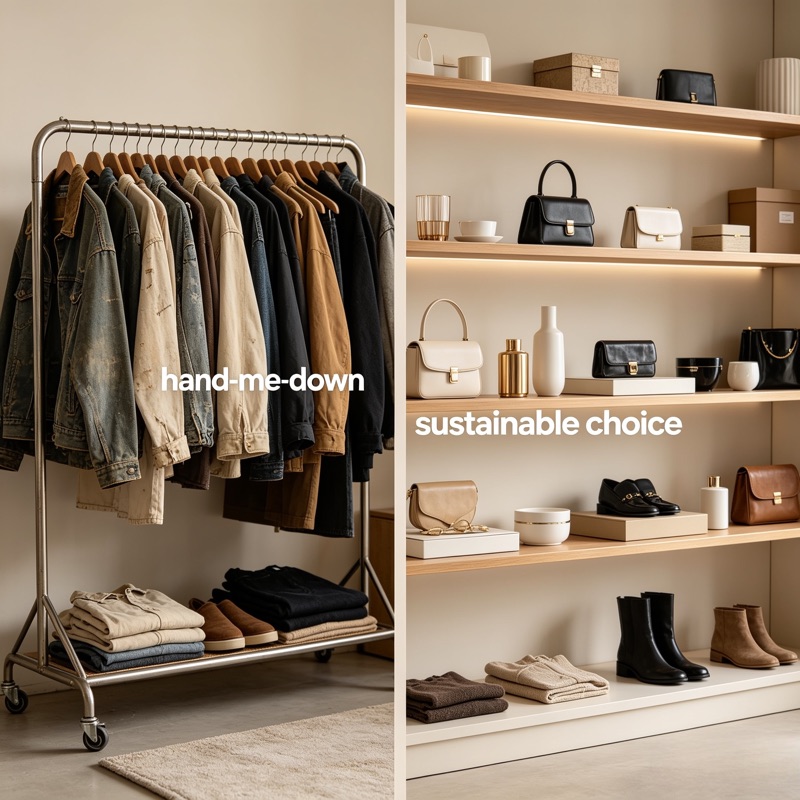
These judgements play out differently depending on one’s financial background and access to resources.
For those with greater disposable income, choices are often framed as a matter of preference. They can choose between high-end brands, mid-range labels, or even affordable options without facing negative judgement, because their ability to afford more is not in question. If they buy less expensive items, it is often interpreted as being practical, eco-conscious, or having good taste for value—never as a sign of limitation.
For those on tighter budgets, the dynamic shifts. Their purchases are more likely to be seen as a reflection of what they can afford rather than what they choose. Even when they select well-made, functional pieces, the price point or lack of a recognizable brand can lead to assumptions of lower social standing or less discerning taste. They face the challenge of balancing limited funds with the desire to feel accepted and respected through appearance.
The Unique Position of Secondhand Shoppers

Secondhand shopping adds another layer to this perception. For decades, buying pre-owned clothing carried a strong stigma, widely associated with financial struggle or inability to buy new. People who shopped at thrift stores, consignment shops, or online resale platforms were often judged as having fewer means, and the items themselves were viewed as less desirable or “used up.”
Today, this view is changing, but the divide remains. For many middle- and higher-income shoppers, secondhand fashion has become a deliberate choice—seen as sustainable, unique, and even fashionable. Finding a designer piece at a fraction of its original price is celebrated as a smart, stylish win, and the item retains its perceived quality and status. The focus shifts from “it is used” to “it is a good find.”
For lower-income shoppers, however, secondhand purchases are still often interpreted as a necessity rather than a choice. The same item bought by someone of different means can be viewed differently: one person is praised for resourcefulness, while the other may still be judged as lacking the means to buy new. This double standard highlights how perception depends more on assumptions about the buyer than on the actual quality of the clothing.
Quality vs. Perception: The Reality Gap
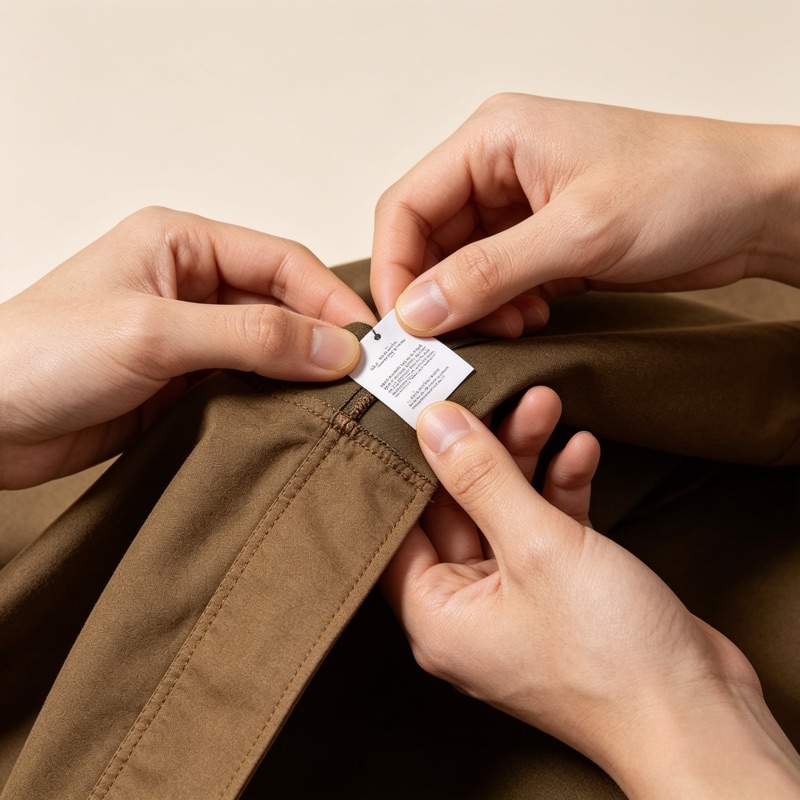
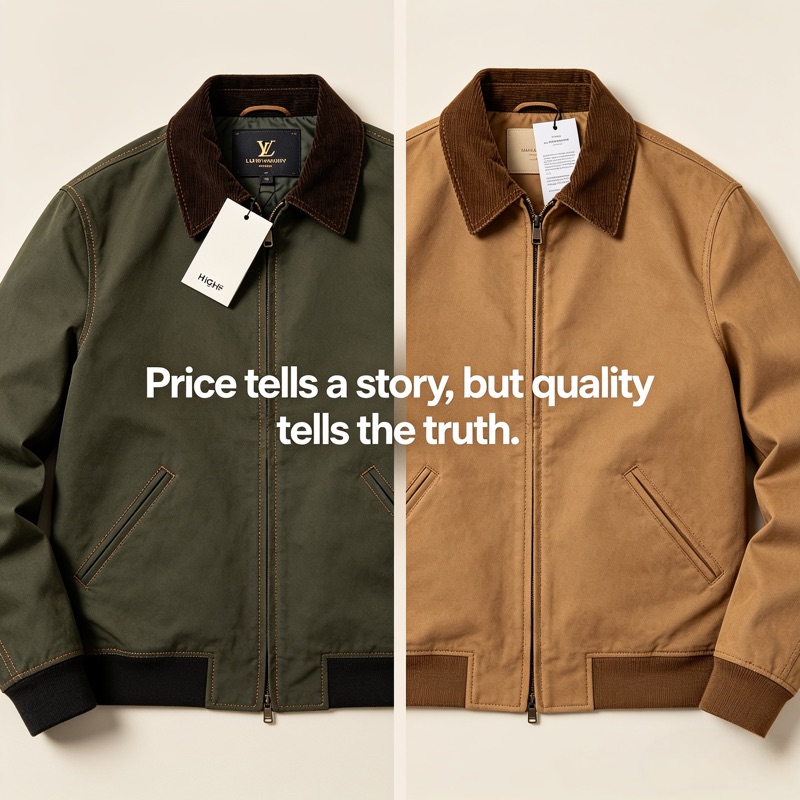
A key truth emerges when looking past labels: price and quality do not always align. Many high-priced fast-fashion and luxury items are mass-produced with materials that wear out quickly, while affordable or secondhand pieces can be made from durable natural fibers, sturdier construction, and timeless designs that last for years.
Secondhand shoppers often understand this best. They learn to evaluate items by feel, stitching, fabric content, and condition rather than by price or logo. For them, true quality is functional and lasting, not symbolic. Yet this knowledge does not always change how others see them. The social narrative still struggles to separate the value of an item from its cost and origin.
Shifting Mindsets and Redefining Worth
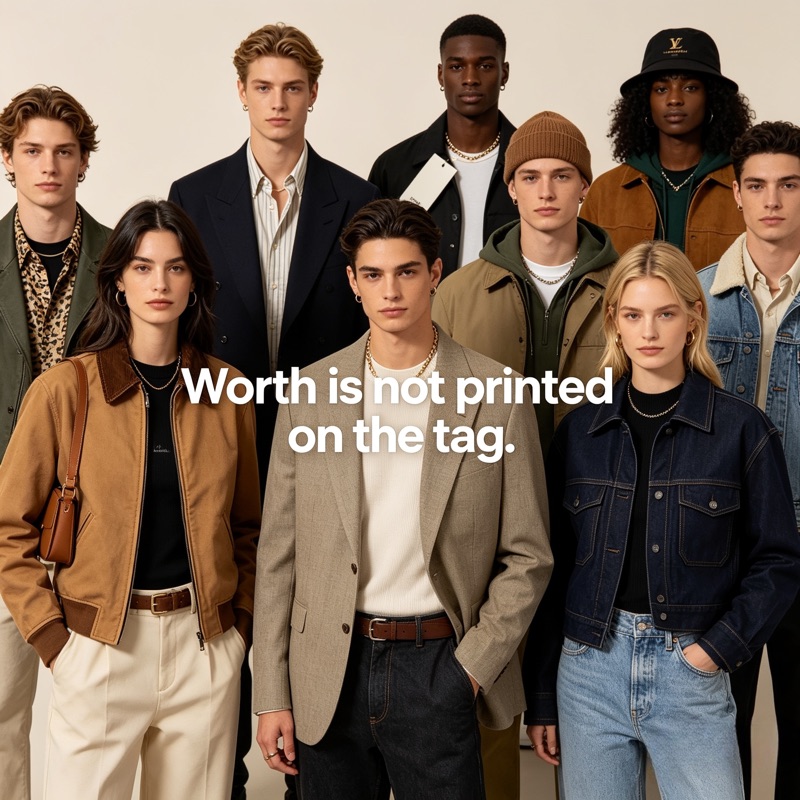
As sustainability and conscious consumption gain traction, perceptions are slowly evolving. There is growing recognition that:
• A high price does not guarantee better quality or longer life.
• A low price or secondhand origin does not mean inferiority.
• Skill, knowledge, and preference matter more than the number on a tag.
This shift benefits all groups. It reduces the pressure to overspend to fit social expectations, validates the choices of those who shop within their means, and removes the stigma attached to pre-owned items. It encourages people to look at clothing for what it is—fabric, design, and purpose—rather than what it represents on a social ladder.
Fashion judgements based on price and socioeconomic background reveal much about how society defines success and value. While perceptions have long favored high-cost, new items, the reality of quality and durability often tells a different story. Secondhand shoppers in particular demonstrate that worth can be found in many places, regardless of original price or ownership history. As more people recognize that true style and value have no fixed price tag, the gap between perception and reality narrows, creating a fairer view of fashion for everyone.


Comments
Post a Comment