FASHION JUDGEMENTS AND SOCIOECONOMIC CHALLENGES: HOW INCOME AND BUDGET SHAPE PRODUCT QUALITY PURCHASES
FASHION JUDGEMENTS AND SOCIOECONOMIC CHALLENGES: HOW INCOME AND BUDGET SHAPE PRODUCT QUALITY PURCHASES
The Realities of Choice, Value, and the Unfair Labels We Attach to Spending
Published: June 12, 2026
Category: Society & Culture • Consumer Behavior • Fashion Psychology • Ethical Living
In the world of fashion and style, the unspoken rule often seems simple: the more you spend, the better the quality, and the higher your status. But behind this common assumption lies a far more complex reality. For millions of people, purchasing decisions are not driven by preference or taste alone—they are shaped, constrained, and often defined by income levels and strict budgets. This creates a double-edged situation: limited financial means can restrict access to longer-lasting, higher-quality items, while at the same time, society judges those choices as a reflection of a person’s worth, character, or social standing. Understanding how income and budget actually shape what we buy, and how unfair judgments distort this reality, is essential to seeing fashion not as a measure of success, but as a reflection of circumstance, choice, and resourcefulness.
THE ECONOMICS OF QUALITY: PRICE POINTS AND REAL ACCESS
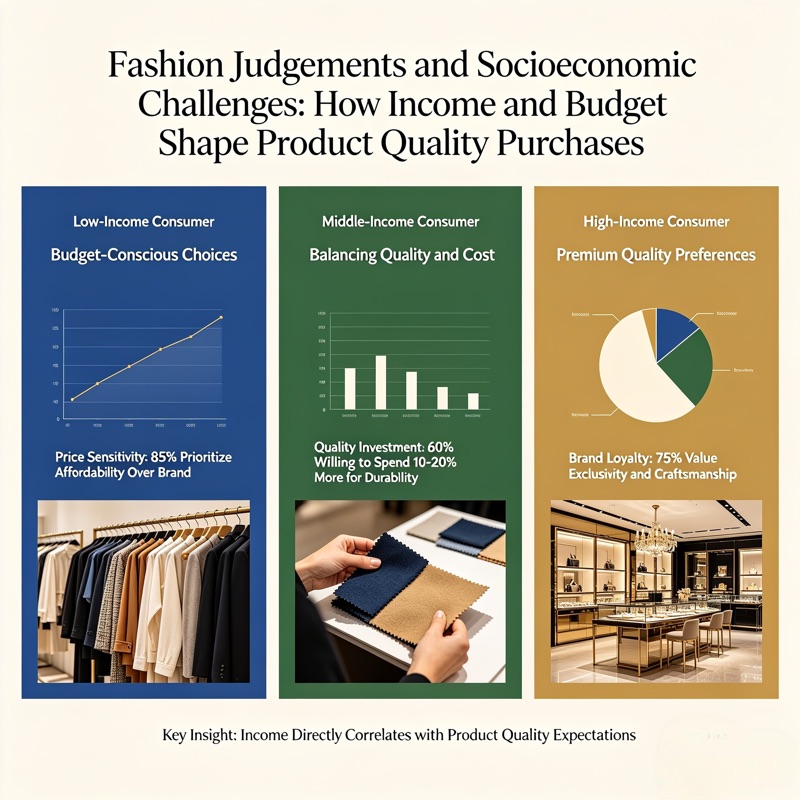
There is a fundamental truth in the market: generally speaking, higher prices often correspond to better materials, more durable construction, ethical labor practices, and longer lifespans. Luxury and mid-range brands can afford to source premium fabrics, employ skilled artisans, and maintain strict quality control—factors that result in clothing and accessories that hold their shape, resist wear and tear, and remain functional and attractive for years. For those with sufficient disposable income, the choice is clear: invest more upfront, and replace items less frequently. This is often called “cost-per-wear” logic, where a higher initial cost becomes more economical over time.
However, this logic assumes one critical condition: the ability to pay that upfront cost. For individuals and families living on modest incomes or fixed budgets, this is rarely an option. When funds are limited, the priority shifts from long-term value to immediate affordability. A ₱500 shirt that lasts six months may be the only feasible choice, even if a ₱2,500 shirt could last five years. The lower price tag is not a sign of poor judgment or lack of taste—it is a necessity dictated by what is available in the wallet today.
This creates a socioeconomic challenge known as the quality gap: lower-income consumers are often forced into a cycle of purchasing lower-quality items that need replacing more often, which can actually end up costing more over time. Yet, because they cannot afford the initial investment, they remain locked in this cycle. Meanwhile, the products they buy are frequently labeled as “inferior,” and by extension, the people who buy them are viewed as having lower standards or less means. This is the first great misunderstanding: the budget shopper is not choosing lower quality because they want to—they are choosing it because it is the only option within their reach.
HOW SOCIETY JUDGES BUDGET CHOICES
The problem extends far beyond economics; it enters the realm of social perception. As we have explored in previous discussions, fashion acts as a visible language. When we see someone wearing clothing from fast-fashion brands, discount stores, or unlabeled items, our brains often jump to conclusions: They cannot afford better. They do not care about quality. They have poor taste. These judgments are automatic, widespread, and deeply unfair, but they shape how people are treated in schools, workplaces, and social settings.
The Stigma of “Cheap”
Words like “cheap” carry a double meaning. They refer to low price, but they also imply low value, lack of durability, and even a lack of class. When someone buys affordable items, they risk being labeled as “cheap” or “struggling,” regardless of whether they are making the smartest possible decision given their circumstances. This stigma creates pressure: many people admit to hiding where they shop, removing labels, or saving for months just to buy one expensive item—not because they need it, but to avoid being judged.
The Myth of “Affordable Equals Inferior”
Compounding this judgment is the outdated belief that affordable products must be of lower quality. While this was often true in the past, the market has evolved. Today, there are well-made, durable, and stylish products available at every price point. Local brands, independent artisans, sustainable labels, and even large retailers are increasingly offering good quality at accessible prices. Yet the perception remains: if it does not cost much, it cannot be good. This misperception blinds observers to the skill and creativity of budget-conscious consumers who know how to find value.
The Reverse Bias
Conversely, those who spend large amounts are often assumed to be making “wise” or “refined” choices, even when this is not the case. A high price tag does not guarantee quality—many luxury items are mass-produced, carry inflated costs due to branding and marketing, and wear out just as quickly as cheaper alternatives. Yet society rarely questions the expensive purchase; it celebrates it. This double standard reinforces the idea that spending money equals intelligence and status, while saving money equals limitation.
BEYOND BUDGET: THE FACTORS THAT SHAPE PURCHASES
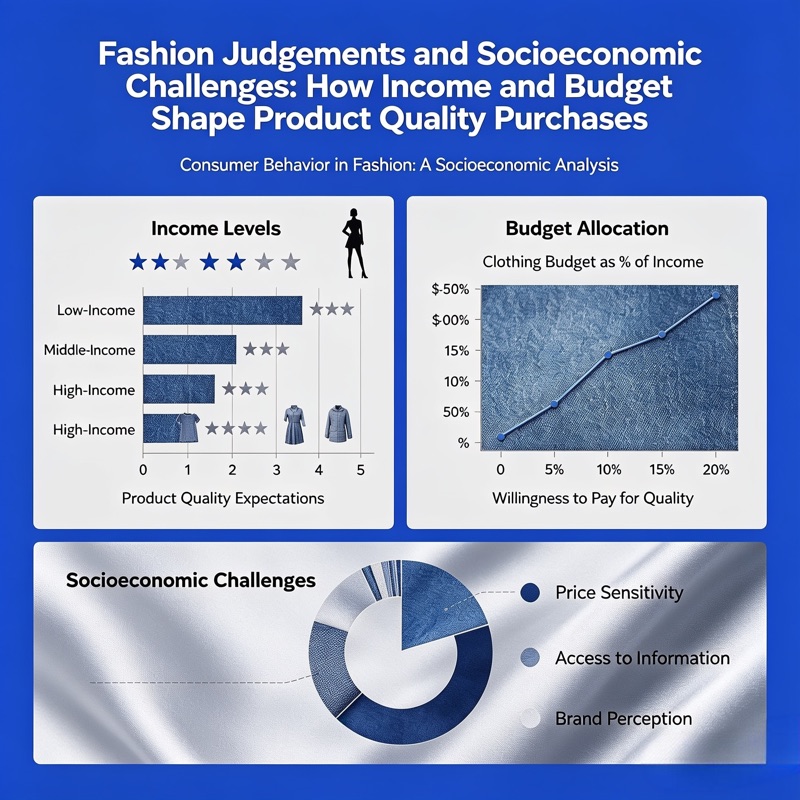
To understand the relationship between income, budget, and product quality, we must look at the full picture. Income is the most obvious factor, but it is not the only one. Several other elements influence what people buy, and they are often overlooked when making judgments:
1. Financial Priorities and Trade-Offs
A person’s income tells us nothing about their financial responsibilities. Someone earning a moderate salary may be supporting an extended family, paying off loans, saving for education, or covering medical costs. In this context, spending more on clothing is not just impractical—it is irresponsible. Choosing a lower-priced item is not a compromise of quality; it is a sign of discipline and responsibility. They are prioritizing life essentials over appearance, yet society often judges them by the latter.
2. Knowledge and Skill in Shopping
Quality is not always visible to the untrained eye, and it is not always tied to price. A savvy shopper can find well-constructed garments, natural fabrics, and timeless designs at thrift stores, local markets, or mid-range retailers. They understand fabric types, stitching techniques, and how to care for items to extend their life. This ability to maximize value is a skill, not a reflection of low status. Unfortunately, because the origin or price is unknown, these choices are often dismissed as “lesser” until proven otherwise.
3. Values and Lifestyle
Many people with comfortable incomes intentionally choose budget-friendly or second-hand items. They may do so to reduce environmental impact, avoid supporting overpriced brands, or simply because they believe quality of life is more important than quality of label. They may own a few high-quality pieces but fill the rest of their wardrobe with affordable, versatile options. When we judge them based on price alone, we completely miss the values behind their choices.
4. Access and Availability
In many regions, including various parts of the Philippines and across the globe, access to high-quality, mid-range, or luxury goods is limited by geography. The nearest stores offering premium products may be far away, or online shipping may be too costly or unreliable. People buy what is available locally, regardless of price or reputation. Again, location and access—not income—determine the purchase.
THE REAL COST OF FASHION JUDGEMENTS
The way we judge purchases based on price and perceived quality has tangible consequences for individuals and society:
• Financial Stress and Debt: The pressure to conform to the “quality = cost” narrative pushes many people to live beyond their means. They take on debt, use credit cards, or neglect savings just to buy items that signal a certain status. This creates a cycle of financial instability fueled by social expectations.
• Undermining Local and Sustainable Markets: When affordable products are automatically seen as inferior, consumers lose interest in supporting small businesses, local weavers, and emerging designers who offer great value without the high overhead costs. This stifles innovation and limits consumer choice.
• Diminished Self-Worth: Constant judgment based on appearance and cost erodes confidence. People begin to believe that their worth is tied to what they can afford, leading to anxiety, insecurity, and a distorted view of success.
• Reinforcing Inequality: Judging people by their purchases creates a rigid social hierarchy where economic status becomes the primary measure of human value. It makes it harder for people from modest backgrounds to advance professionally or socially, as they are underestimated before they even speak.
REDEFINING QUALITY: BEYOND THE PRICE TAG
If we are to move past these unfair judgments, we need to redefine what “quality” actually means. True quality is not defined by how much you pay, but by how well the item serves its purpose, how long it lasts, and how it makes you feel. It is also defined by the thought behind the purchase:
• Functional Quality: Does it fit well? Is it comfortable? Does it withstand regular use?
• Personal Quality: Does it reflect your style? Does it bring you joy? Does it align with your values?
• Value Quality: Does it give you the best possible result for the money you have?
When we look at it this way, the person who carefully selects a well-made affordable garment and wears it with pride is demonstrating far better judgment than someone who buys an expensive item just to impress others. It is a shift from conspicuous consumption to conscious consumption.
We see this philosophy embodied in the style icons we admire. Catriona Gray and Heart Evangelista both emphasize that elegance is not about cost—it is about how you carry yourself. Sabrina Carpenter proves that you can look glamorous and fashionable in both high-end couture and accessible pieces. Even our previous exploration of Philippine gown design shows that the finest craftsmanship can be found in items made from local materials, priced fairly, and rich in heritage.
A NEW PERSPECTIVE: CHOICE OVER BUDGET
Recognizing how income and budget shape purchases does not mean accepting lower standards—it means understanding the context behind every choice. It teaches us to replace judgment with empathy. Instead of looking at someone’s outfit and wondering “Why can’t they afford better?”, we should ask “What matters most to them right now?”
For the consumer, this means freeing yourself from the pressure to keep up with others. It means taking pride in your resourcefulness, your ability to make smart choices, and your understanding that your value as a person does not fluctuate with your bank balance. It means celebrating the fact that you can look good, feel good, and dress well at any income level.
For society, it means breaking the link between price and worth. It means recognizing that a beautiful, well-made garment can be found at every price point, and that the person wearing it deserves respect regardless of how much they paid. It means valuing creativity, skill, and integrity over brand names and status symbols.
CONCLUSION: WORTH IS NOT FOR SALE
Fashion judgements and socioeconomic challenges are deeply intertwined, but they do not have to define our lives. Income and budget will always set limits on what we can buy, but they should never set limits on how we are seen or how we see ourselves. Quality is not exclusive to the wealthy, and style is not a privilege reserved for those with deep pockets.
The greatest lesson is this: What you buy tells us about your circumstances; how you wear it tells us about your character. A person who makes the best of their budget, cares for their belongings, and carries themselves with confidence possesses a kind of value that no price tag can measure.
At G&T Hollywood Models, we believe that true style is democratic—it belongs to everyone, regardless of income. We celebrate the smart shopper, the creative mixer, and the proud wearer of every price point. When we stop judging people by the cost of their clothes, we create a world where fashion is about expression, not exclusion—and where every purchase is a choice, not a verdict.


Comments
Post a Comment