MORAL AND ETHICAL CONDUCT OF THE FASHION INDUSTRY: JUDGEMENTS ON SOCIAL CLASSES' PERCEPTIONS OF TRENDING FASHION STYLES
MORAL AND ETHICAL CONDUCT OF THE FASHION INDUSTRY: JUDGEMENTS ON SOCIAL CLASSES' PERCEPTIONS OF TRENDING FASHION STYLES
Fashion has always been more than fabric, color, and silhouette; it is a powerful social language, a reflection of values, and a mirror that reveals how different groups in society view themselves and one another. When we examine the moral and ethical conduct that guides the industry, we uncover a complex relationship between creators, consumers, and the systems that define beauty, worth, and status. At the heart of this relationship lies a fascinating, often sensitive dynamic: how social classes perceive trending fashion styles, and how these perceptions are shaped, influenced, or judged by the standards set by designers, brands, and the media. Understanding this dynamic is essential, because it touches on the very principles we uphold in our community: that style should be inclusive, respectful, authentic, and accessible to everyone, regardless of background or status.
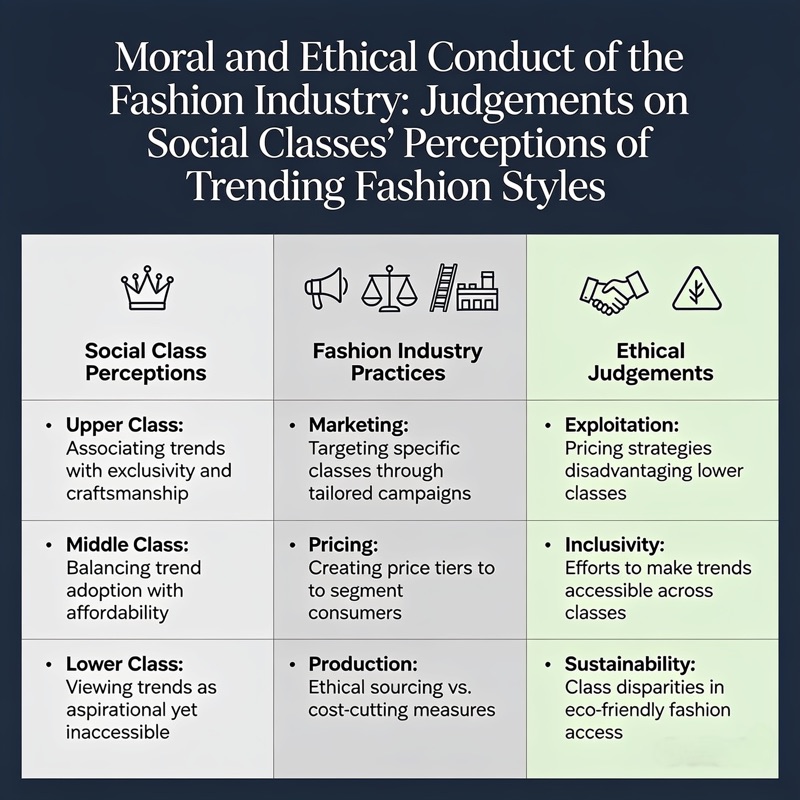
Historically, fashion was a strict indicator of social standing, governed by laws that dictated exactly what different classes could wear. Luxury, intricate design, and rare materials were reserved exclusively for the elite, while simplicity and durability were assigned to the working class. Over time, those legal barriers disappeared, but the cultural and psychological divisions remained deeply embedded. Even today, the industry often operates within a framework where trends are created at the highest levels—runways, luxury houses, and celebrity circles—and then filtered down through mid-range brands, fast fashion retailers, and independent designers to reach wider audiences. While this democratization of style is often celebrated as progress, it also raises significant ethical questions. There is a lingering tendency within parts of the fashion world to treat trends as hierarchical, where the original, expensive version is viewed as “legitimate,” “superior,” or “tasteful,” while accessible interpretations are labeled as “cheap,” “tacky,” or “inauthentic.” This judgmental approach creates a moral dilemma: does the industry exist to serve and empower everyone, or does it continue to reinforce outdated class distinctions and reinforce harmful stereotypes about who deserves to look good?
Perceptions of trending styles vary greatly across different social groups, and these differences are often misunderstood or unfairly judged. For high-income consumers, fashion is frequently seen as an investment, a form of art collection, and a way to signal exclusivity and refined taste. They may view trends through the lens of heritage, craftsmanship, and brand legacy, often prioritizing uniqueness and quality over mass appeal. Meanwhile, middle-income consumers tend to view trends as a way to stay relevant, express their personality, and participate in global culture without overextending their means. They value versatility, practicality, and balance between current aesthetics and personal comfort. For lower-income consumers, fashion is about accessibility, resourcefulness, and making the most of limited options; trends are adapted, mixed, and reimagined to fit budgets and daily realities, often resulting in highly creative and meaningful expressions of identity. Ethically, every one of these approaches is valid and valuable, yet society frequently applies double standards: a wealthy person wearing a bold or unconventional trend is called daring and fashionable, while someone with fewer resources wearing the same trend is often dismissed or criticized. This bias reveals a fundamental failure in moral conduct: the assumption that style and worth are tied to price tags or social position is not only unfair, but fundamentally wrong.
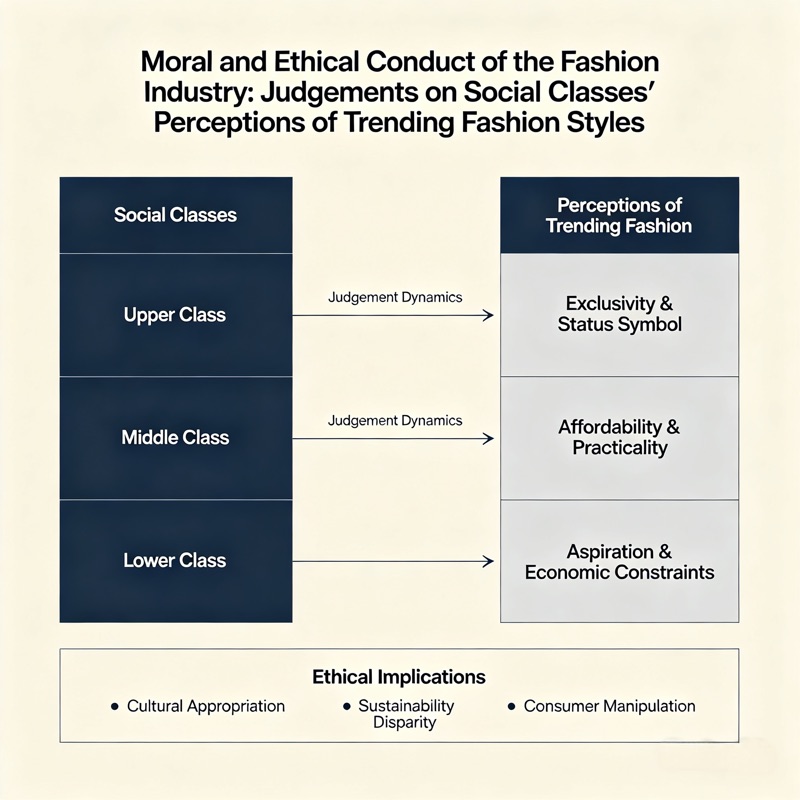
The responsibility for correcting these perceptions and judgments lies heavily with the fashion industry itself. Brands, influencers, designers, and media platforms hold immense power in shaping how trends are presented and how different consumers are represented. Ethical conduct means acknowledging that beauty and style have no class boundaries, and that the true value of a garment lies in how it makes the wearer feel, how it is made, and the story it tells—not how much it costs or who originally designed it. It requires moving away from narratives that glorify excess and exclusivity, and instead promoting messages of creativity, resourcefulness, and respect for all forms of consumption. We have seen positive shifts in recent years, with movements like sustainable fashion, size inclusivity, and upcycling gaining momentum, proving that ethical fashion aligns with values that people from every social class can embrace. Icons we admire—from Margie Moran and Catriona Gray to Sabrina Carpenter and Kirk Bondad—demonstrate this principle perfectly: they wear high fashion with elegance, but they also celebrate accessible style, because they understand that true glamour comes from confidence, character, and authenticity, not status.
When we judge others based on how they interpret or follow trends, or when we allow the industry to dictate that certain styles are only suitable for certain groups, we undermine the very purpose of fashion as an art form and a means of self-expression. Moral conduct in fashion means recognizing that every person has the right to engage with trends in the way that works best for their life, their budget, and their identity. It means rejecting the idea that there is a “correct” or “superior” way to be stylish, and understanding that diversity in perception and expression is what keeps fashion alive, evolving, and meaningful. In our community, we believe that the most ethical approach to fashion is one that bridges divides, honors individuality, and reminds us all that whether a garment is couture or thrifted, it becomes beautiful when worn with pride and purpose. Trends may come and go, but the values of respect, fairness, and inclusivity remain timeless, and these are the standards by which the fashion industry—and each of us as consumers—should always be measured.
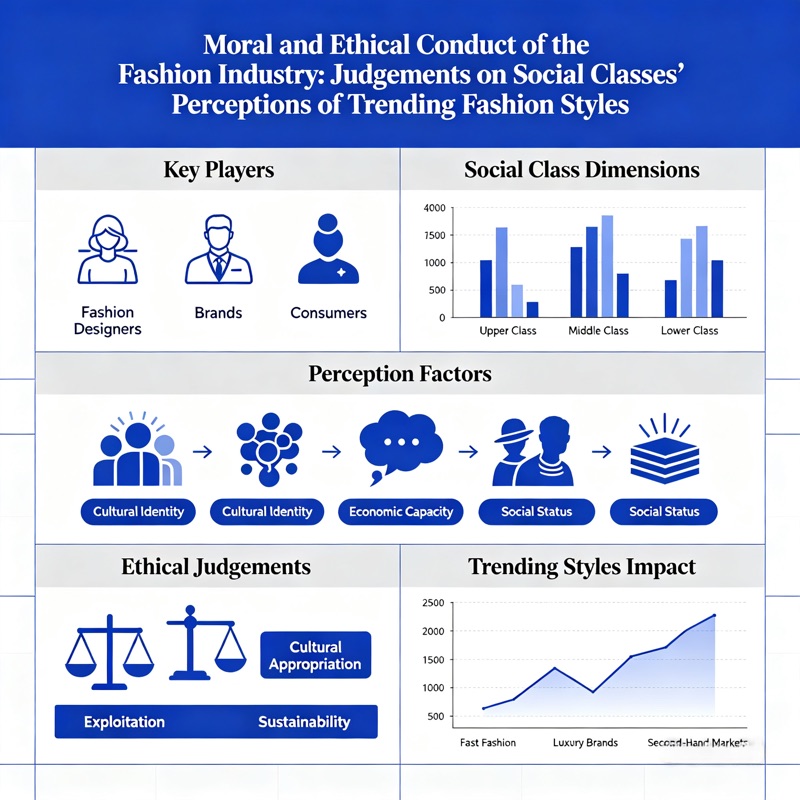
The conversation around moral and ethical conduct in fashion does not end with how trends are perceived; it extends to how they are produced, marketed, and discarded, and how these processes impact different communities. For too long, fast fashion—often the most accessible option for lower-income consumers—has been criticized for poor labor conditions and environmental harm, while luxury fashion has been framed as more “ethical” simply because of its price point, regardless of its own impact. This is another layer of unfair judgment: consumers who choose affordable options are often shamed or blamed for industry problems, while those who purchase expensive goods are praised as more responsible, even though the reality of production and ethics is far more complex and nuanced. True ethical conduct requires transparency, accountability, and education from all sides. Brands must ensure fair wages and safe conditions no matter the price range of their products, and consumers must be empowered to make choices that align with their values, without fear of being judged for their budget or their preferences. Perception must shift from seeing fashion as a hierarchy to seeing it as a shared space where every choice is an opportunity to express oneself and support what is right.
Ultimately, the way we understand and judge fashion styles based on social class reveals much about our society’s values, and it is up to us to reshape those values for the better. Fashion has the incredible power to unite people, celebrate diversity, and tell stories that transcend boundaries, but it can only do so if it is guided by strong moral and ethical principles. When we recognize that a trend’s meaning is defined by the person wearing it, not by their income or status, we unlock fashion’s true potential as a force for good. In our journey to define glamour and talent, we hold fast to the belief that style is universal, that dignity is non-negotiable, and that every individual deserves to be seen, respected, and celebrated through the clothes they choose to wear. This is the future of fashion: ethical, inclusive, and free from judgment, where everyone is invited to participate, create, and shine.


Comments
Post a Comment